
Nepal's devastating flash floods have claimed 1,127 lives, with thousands still missing a week after the disaster. Rescuers are intensifying efforts to find survivors and recover bodies across affected regions, while police work to identify victims and relocate families from high-risk areas.

India's wholesale price index (WPI) inflation marginally eased to 9.78 per cent in July 2026, down from 9.87 per cent in June, primarily due to a cooling in the prices of fuel, power, and food items, marking the first month-on-month drop under the new 2022-23 base year.

The World Bank has increased India's economic growth projection for FY27 to 6.6 per cent, citing resilient domestic demand, while simultaneously cutting its global economic growth outlook due to the conflict in West Asia.

India's foreign exchange reserves saw a significant increase of $10.512 billion, reaching $692.866 billion for the week ending July 31, driven by a rise in foreign currency assets and gold reserves.

Indian benchmark indices, Sensex and Nifty, experienced significant declines, with the Sensex falling 493 points and the Nifty dropping for the sixth consecutive day, primarily due to elevated crude oil prices reaching USD 91 per barrel and diminishing hopes for a diplomatic resolution in West Asia.

The Reserve Bank of India (RBI) has maintained its benchmark policy rate at 5.25 per cent for the fourth consecutive meeting, prioritising clarity on inflation trends, particularly concerning energy costs and geopolitical developments.

The Asian Development Bank (ADB) has revised down India's GDP growth forecast for fiscal year 2026-27 (FY27) to 6.6 per cent from an earlier 6.9 per cent, primarily attributing the change to elevated energy prices stemming from the Middle East conflict. Despite this moderation, India is still expected to remain the world's fastest-growing major economy.

India's retail inflation, measured by the Consumer Price Index (CPI), rose to 4.45 per cent in July, up from 4.38 per cent in June, primarily due to higher food prices, particularly onions and ginger. This marks the second consecutive month the inflation rate has remained above the Reserve Bank's median target.

RBI Governor Sanjay Malhotra stated that the central bank is closely monitoring whether the supply shock from the West Asia conflict will lead to a generalised price rise, potentially necessitating monetary policy action.

The Supreme Court has extended its order staying the arrest of Sumit Roy, personal assistant to Trinamool Congress MP Abhishek Banerjee, in connection with the Salboni land-grabbing case. The West Bengal government alleged Roy was not cooperating with the probe, while Roy's counsel argued he has a right to silence and the case is politically motivated. The court will review a sealed cover report from the police before further proceedings.

Indian benchmark indices, Sensex and Nifty, saw early gains driven by lower crude oil prices and buying in Reliance Industries, even as the Reserve Bank of India maintained its benchmark policy rate for the fourth consecutive meeting, reinforcing confidence in the domestic economy.

Indian stock markets ended a five-day losing streak, with the Sensex surging 776 points and the Nifty gaining 228 points, driven by a significant drop in crude oil prices and easing geopolitical tensions in West Asia.
The Reserve Bank of India (RBI) has kept its key lending rate, the repo rate, unchanged at 5.25 per cent for the second consecutive time, citing concerns over rising energy prices, supply disruptions from the West Asia crisis, and potential inflationary pressures.
Indian benchmark indices, Sensex and Nifty, experienced declines in early trade due to a significant surge in crude oil prices, exacerbated by escalating tensions in the West Asia. Track how Sensex, Nifty fared on July 23.

The Sri Lankan government attributes the sharp depreciation of the rupee against the US dollar to the ongoing conflict in West Asia, citing increased costs for essential imports like gas, fertiliser, and oil.

The Reserve Bank of India has marginally increased its GDP forecast for the current fiscal to 6.7 per cent while slightly lowering the inflation projection to 5 per cent. The central bank noted that while domestic economic activity shows resilience, global turbulence, particularly re-escalating conflicts and volatile oil prices, continues to pose risks to the inflation outlook.

The devastating flash floods wreaked havoc across Nepal, with the ministry of external affairs on Thursday stating that 84 Indian nationals have been rescued while 290 remain uncontactable as the Himalayan nation stepped up search, rescue and relief operations following the disaster that has claimed more than 390 lives.

Fuel prices have risen by about Rs 7.5 per litre since May 15, as global crude oil prices surged due to the ongoing conflict in West Asia and supply concerns around the Strait of Hormuz.

India's foreign exchange reserves increased by USD 6.118 billion, reaching USD 682.354 billion for the week ending July 24, according to the Reserve Bank of India.
Indian stock market indices closed on a mixed note, with the Sensex gaining 374 points driven by buying in Reliance Industries and ICICI Bank, while the Nifty remained flat. This divergence is attributed to a new Closing Auction Session (CAS) mechanism introduced by stock exchanges, impacting market liquidity and price discovery.

India's public sector banks (PSBs) have seen their net profit nearly treble over the past five years, reaching a record Rs 1.98 trillion in FY26, driven by significant improvements in asset quality and sustained lending growth across key economic sectors.

The Israel Defence Forces carried out two 'brigade-level' raids in the West Bank's Jenin refugee camp and Balata refugee camp on Sunday and detained suspects and seized weapons.

The West Bengal government will hand over land to the Border Security Force for international boundary fencing and security infrastructure, starting with a 27 km stretch. Chief Minister Suvendu Adhikari said more land would be provided wherever required to strengthen border management in the state.

The Reserve Bank of India (RBI) maintained its key policy rates for the fourth consecutive time, keeping the repo rate at 5.25 per cent, while the benchmark BSE Sensex closed 152 points higher in a volatile session, recovering from an intraday dip.

The Indian government has approved the introduction of one billion polymer banknotes in Rs 10 and Rs 20 denominations for field trials, aiming to enhance durability. This move comes as the Finance Minister also addressed Parliament on declining retail inflation, GST reforms, and other fiscal measures taken to support the economy and household consumption.
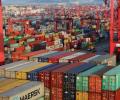
India's trade deficit reached a six-month high of $31.98 billion in July, driven by a sharp increase in imports, particularly crude oil, electronic goods, coal, and fertilisers. Both merchandise exports and imports recorded their second-highest levels during the same period.

The Palestinian ministry of health said that they have found a number of bodies and injured people from the camp, as the IDF has partially withdrawn from the area.

Microsoft has launched its fourth cloud region in India, located in Hyderabad, significantly expanding its hyperscale cloud presence. This move is part of a USD 20.5-billion investment in India's digital and AI infrastructure, aiming to support the country's rapid digital growth and meet increasing demand from major enterprises.
India's foreign exchange reserves increased by USD 964 million to USD 675.157 billion in the week ending July 10, according to the Reserve Bank of India.

The West Bengal cabinet has decided to discontinue assistance-oriented schemes based on religious categorisation for Imams, muezzins and purohits from June. The cabinet also approved the 'Annapurna' scheme of Rs 3,000 monthly support to women from June 1, and granted in-principle consent for their free travel in state-run buses.

The new Israeli settlements in the West Bank are illegal and inconsistent with international law, United States Secretary of State Antony Blinken has said, reversing a Trump-era policy.
West Bengal Chief Minister Suvendu Adhikari has announced a new border security initiative, including land transfer to the BSF and a 'detect, delete and deport' policy targeting infiltrators.

Bank of Baroda economists project India's GDP to grow 6.5-6.8 per cent in FY27 but warn that the fiscal deficit could overshoot the budgeted 4.3 per cent target, potentially reaching 4.7-4.8 per cent of GDP due to subsidy overruns, excise duty cuts, and oil marketing company losses.

Odisha Police's Economic Offences Wing (EOW) has arrested two more individuals in connection with a Rs 9.6 crore bank fraud case, bringing the total number of arrests to six. The accused, Surjit Roy and Sameer Srivastav, were apprehended in Raipur, Chhattisgarh, for allegedly withdrawing funds from the District Mineral Foundation (DMF) trust using forged cheques.

Economists highlight that resolving domestic policy bottlenecks, particularly through land reforms and improving the ease of doing business, will be critical for Prime Minister Narendra Modi's 'next-generation reforms' and India's economic transformation towards its 'Viksit Bharat' vision for 2047.
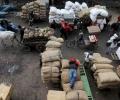
Moody's Analytics predicts India will remain the fastest-growing major economy in 2026 and 2027, but its pace will moderate due to a global slowdown, geopolitical risks, and financial market volatility, despite the boost from AI demand.

'Healthy double-digit returns are still possible, though a sharp rally is unlikely.'

Poor families, she said, cut corners on their own needs to pay for coaching and fees, and when their child clears JEE, it's the happiest day the family has had in years. So why, she asked, her voice already starting to climb, does the same system that we're told is the best in the country keep pushing those very students toward what she called 'institutional deaths'?

Palestinian soccer federation President Jibril Rajoub refused to stand alongside Israel FA Vice-President Basim Sheikh Suliman in a heated moment at the FIFA Congress on Thursday.
Former West Bengal minister Sujit Bose has been arrested by the Enforcement Directorate in connection with a money laundering case linked to an alleged municipality recruitment scam.
